
Fellowship Workshop
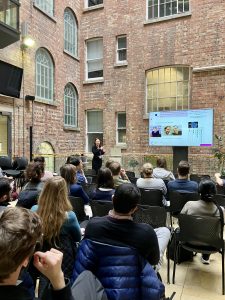
In March 2026, we held a workshop looking at advice for approaching Fellowship applications. The event was hosted jointly with the Cancer Research UK City of London Radiation Research Centre of Excellence,
We were privileged to hear from Dr Ivana Bjedov, who is a Cancer Research UK (CRUK) Senior Research Fellow, and Dr Kelly Sheehan-Rooney, a Strategic Research Development Manager at King’s College London who was previously Head of the Fellowship Programme at EMBO.
Dr Bjedov and Dr Sheehan-Rooney’s tips are summarised below.
Get ready!
- Start early and research the funders – use events and social media to understand funders, calls, and the broader landscape. Seek out the best lab for you.
- Look at people and projects that have previously been successful – what can you learn?
- Be honest with yourself – what are your strengths and weaknesses? What project will enable you to stand out?
- Be prepared to apply to several funders and remember, it’s normal not to be successful every time.
Write your application
- Differentiate yourself from your post doc supervisor – your project must be your own research question.
- Set out a 5-10 year vision for your research.
- Show your professional readiness – first author publications, mentoring, presentational skills and grant writing experience.
- An excellent proposal will have an important biological question, a conceptual angle for solving it, and a unique toolkit or system for doing so.
- Seek and integrate feedback from critical friends early in the process.
- Remember, your application will be read by (tired, overworked) humans! Make your writing clear and accessible.
Enter the “Dragons’ Den”
- Do some mock interviews before you appear before a Fellowship panel.
- Research your interviewers.
- Expect a challenge – the interviewers will push you beyond your comfort zone in order to test the extent of your knowledge. Don’t panic, and don’t get defensive.
- Think like the CEO of a start-up, and show the funders how and when you will deliver on their investment. Show them how exciting your idea is, and why you are the right leader, in the right place, to take the work forward. Who are your collaborators? What are the risks and contingencies? How will you develop your niche?